IN THE HEART OF THE VILLAGE RADDA IN CHIANTI, IN THE ANCIENT PASSWAY
(LA GALLERIA ) UNDER PALAZZO LEOPOLDO
Ceramics
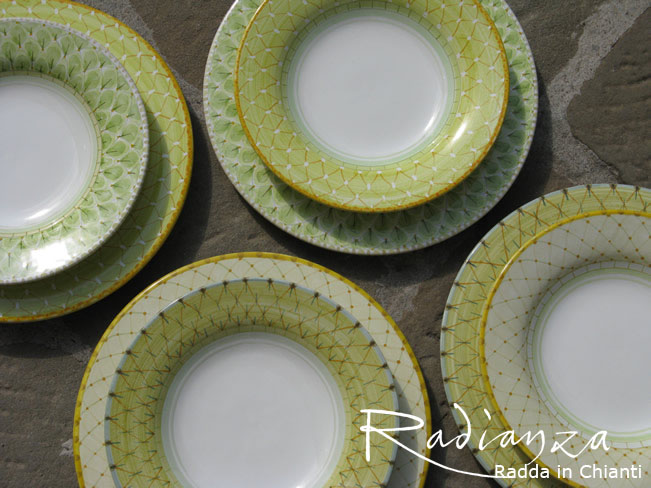
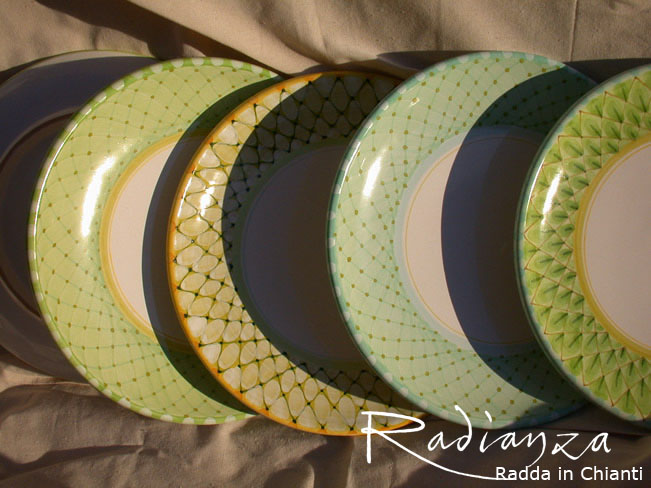
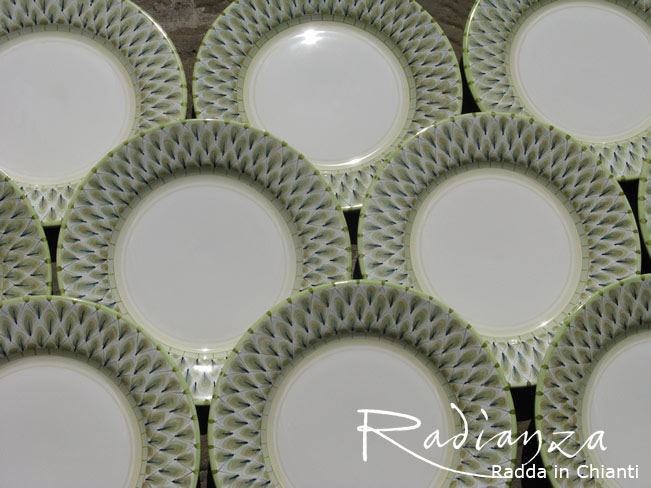
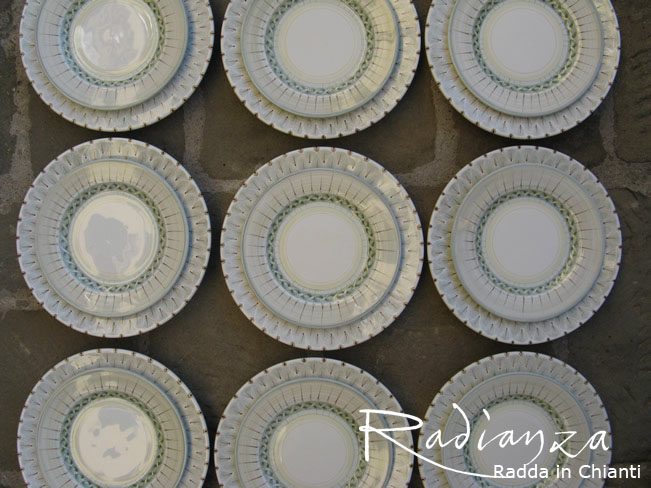
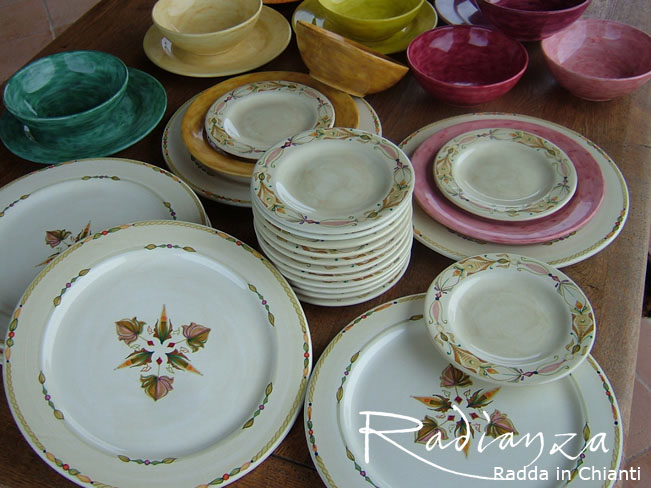
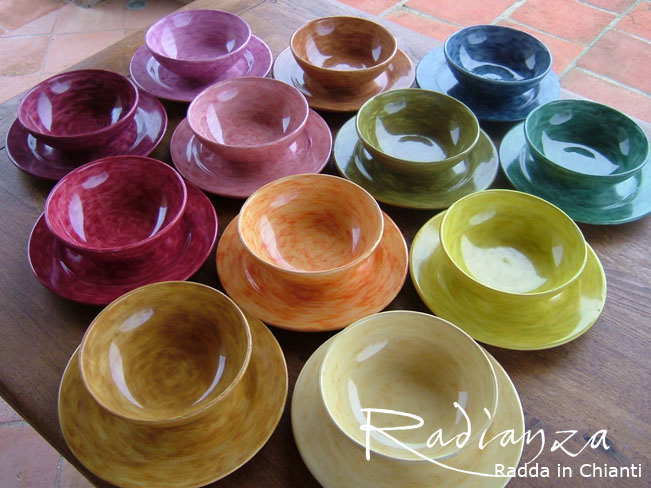
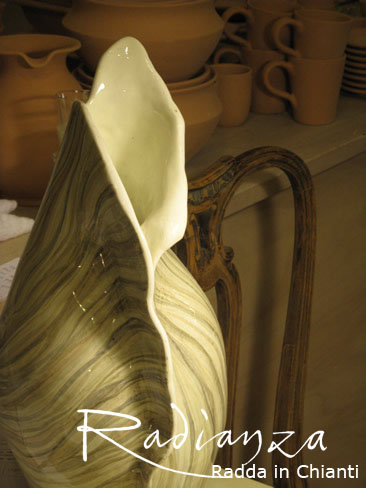
These ceramics, specifically majolica, are all hand-painted by Lies Robbertsen. She does not use stencils; each piece is decorated free-hand.
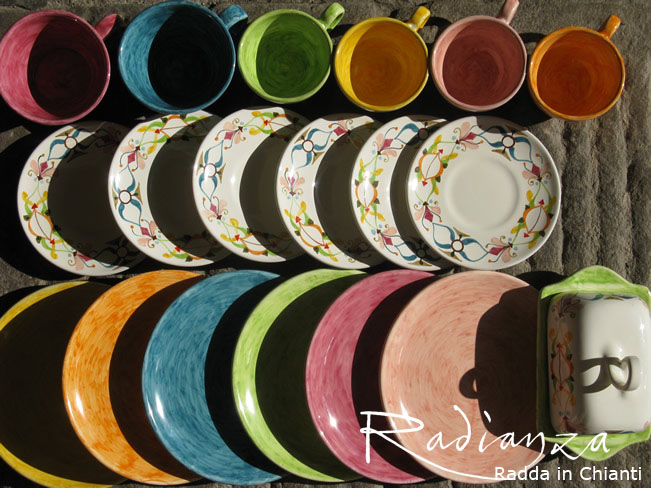
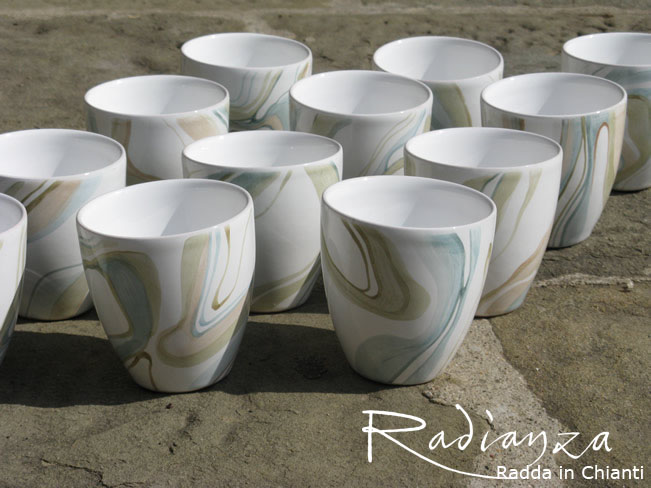
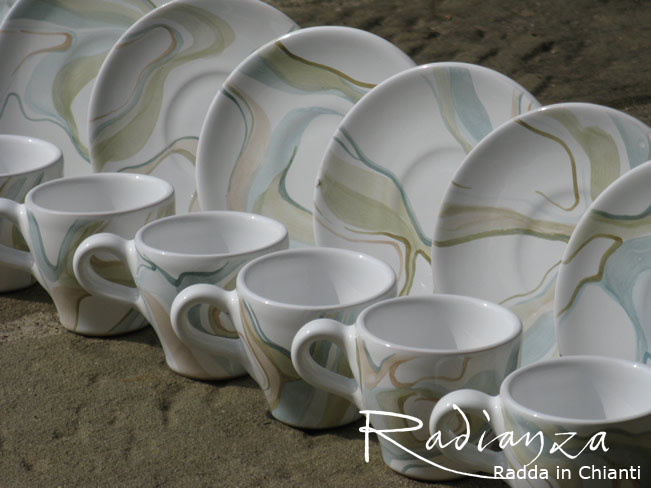
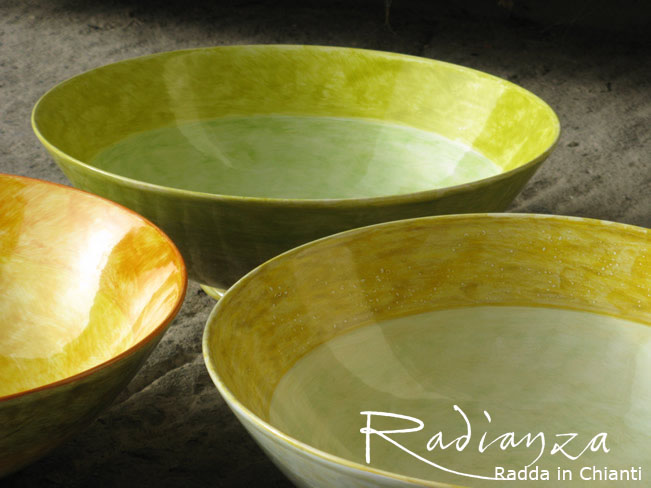
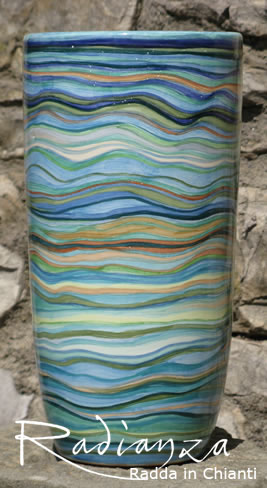
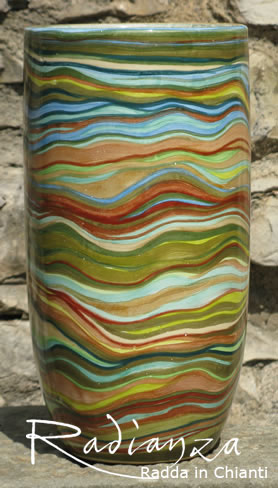
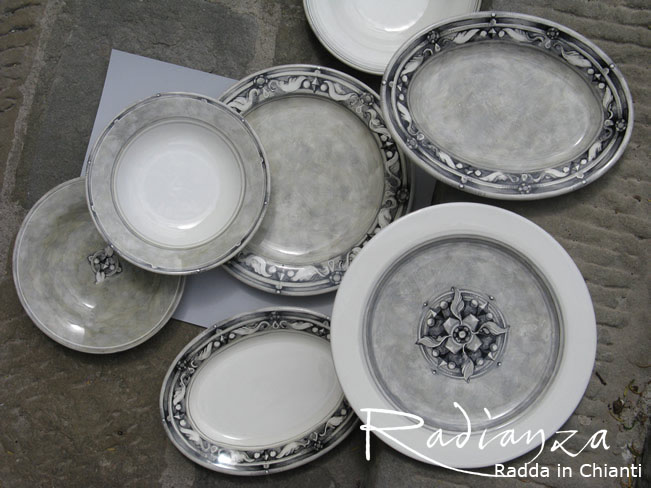
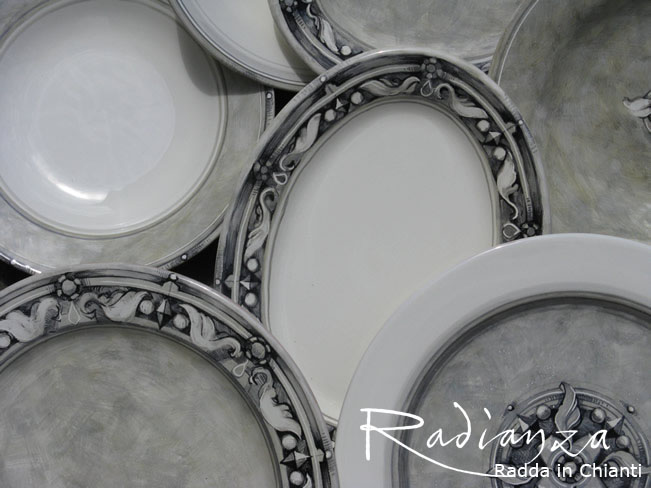
Her work in ceramics is divided into two groups: One group are the ceramics that will be used as dinnerware, to eat from, to drink from. The designs for these ceramics that Lies has created and developed over the last 15 years will show the food in all its beauty, the colours of the ceramics highlighting the colours of the food. The other group are decorative pieces of any size, form and shape, with almost all colours being possible. These are designed to stand in places to be admired.
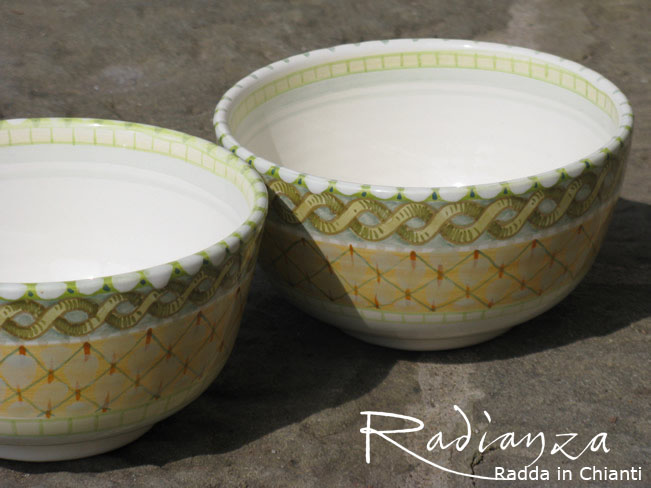
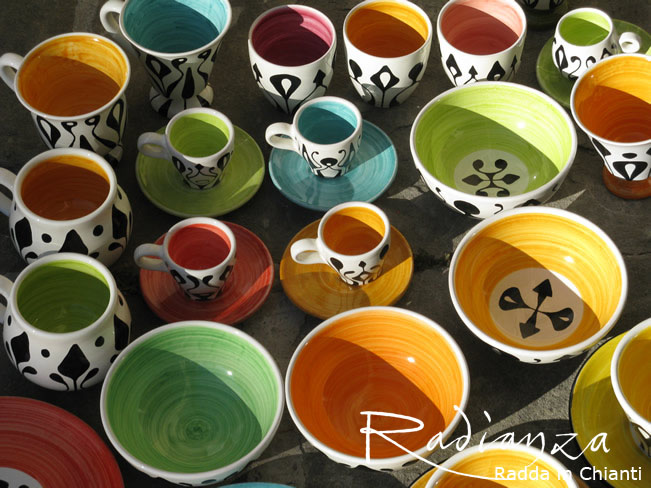
When you visit the RADIANZA studio in Radda, you'll find ceramics for sale. However, with so many years of experience in commissioned work, Lies will be pleased to discuss your particular wishes for your dinnerware, looking at the different samples together. These can be whole sets of dinnerware, large or small, or individual pieces, all created to personal wishes. Sometimes, clients bring in photos showing the colours and the style of their homes so that the new ceramics will be designed and decorated to harmonise perfectly with the home environment.
The ceramics are fired twice. Firstly, in small ateliers in Umbria, where the grey clay turns to red biscuit clay (bisque). Secondly, after Lies has completed the glazing and decoration, they are fired once more at her studio (at 930°C). All materials, glaze and colours are toxic-free and safe in a household environment. However , these ceramics should not be heated suddenly in hot ovens, nor put in microwaves. They can be cleaned in dishwashers.
Majolica ceramic was invented in the Middle East over 600 years ago, and moved across the north of Africa, coming to Europe through Spain, and arriving in Italy via Majorca. This accounts for the term "majolica" in Italy, whereas in France the same ceramics are called faence.
Corrections in this technique whilst decorating are hardly possible as the painting is done directly on the powdery surface that is the glaze. This calls for the utmost attention during planning, preparation and realization. The colours, metal-oxides, change in the firing, so to achieve a finished creation with a certain look, a lot of experience, many firings, numerous re-adjusting of the colour recipes are called for : a never-ending adventure and challenge for Lies.